Vancouver rain rarely arrives as weather. From late October to mid-April it settles in as a condition: a fine, patient drizzle that soaks you over forty minutes rather than forty seconds, under a sky the colour of wet newsprint. Stand on a downtown corner on a November Tuesday and count the umbrellas. There are hardly any.
Nobody will explain why. The city has built a set of habits around six months of drizzle, and you can pick them up in an afternoon: how the wet season works, which rooms are worth sheltering in, and which ones will be shut on the exact day you turn up. For the rest of the city, start with the Vancouver guide.
Vancouver wears a hood
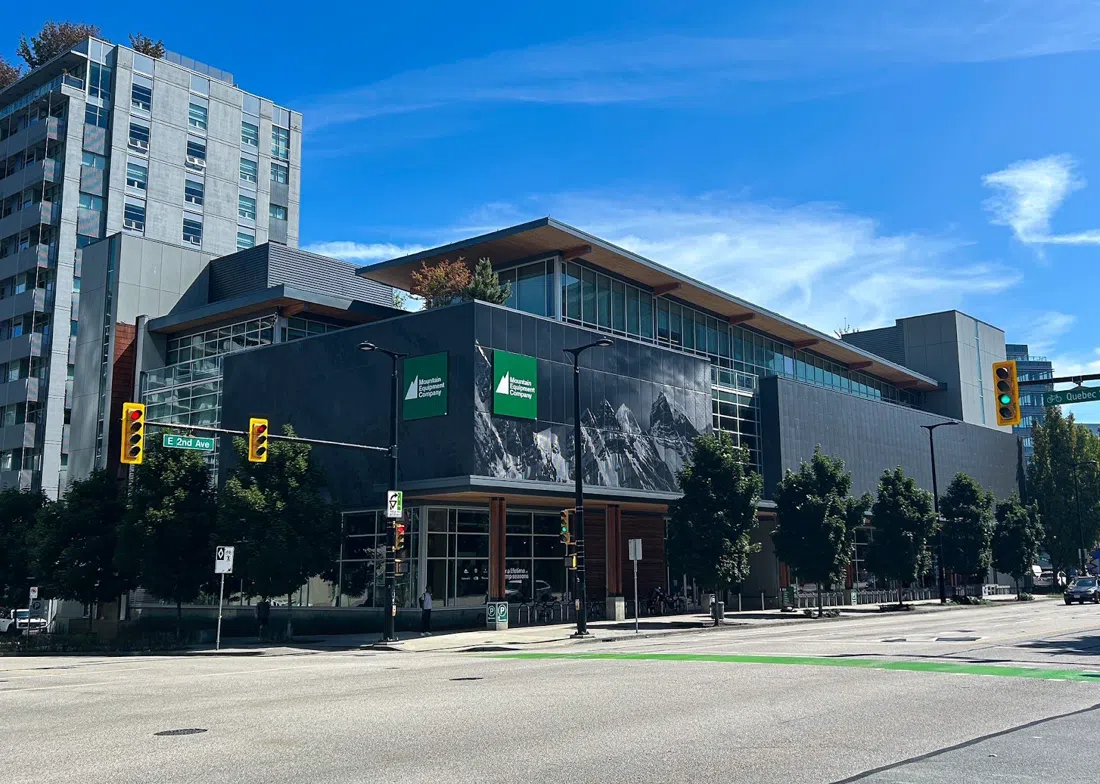
The umbrella is outgunned rather than banned. Coastal rain comes with wind off the water, so a canopy that behaves on a sheltered downtown block turns into a sail the moment you reach a seawall, a bridge deck or an open plaza. Locals wear a hood and a shell they barely take off between November and April. The shop that makes the point is MEC Vancouver (Mount Pleasant, at the eastern end of False Creek): open retail, no booking, groups fine, free to browse. Rain shells run CAD $150–500, and there is gear rental and community programming if you are here for a week rather than a season.
A Vancouver-made umbrella is no longer a souvenir option. The city's historic Umbrella Shop shut its doors in 2017, and the successor business is a wholesaler with no walk-in store. What you get instead is the local calculation, which you will start running yourself by day two: how many minutes am I outside, and can I do this trip under a roof?
The etiquette, in three rules
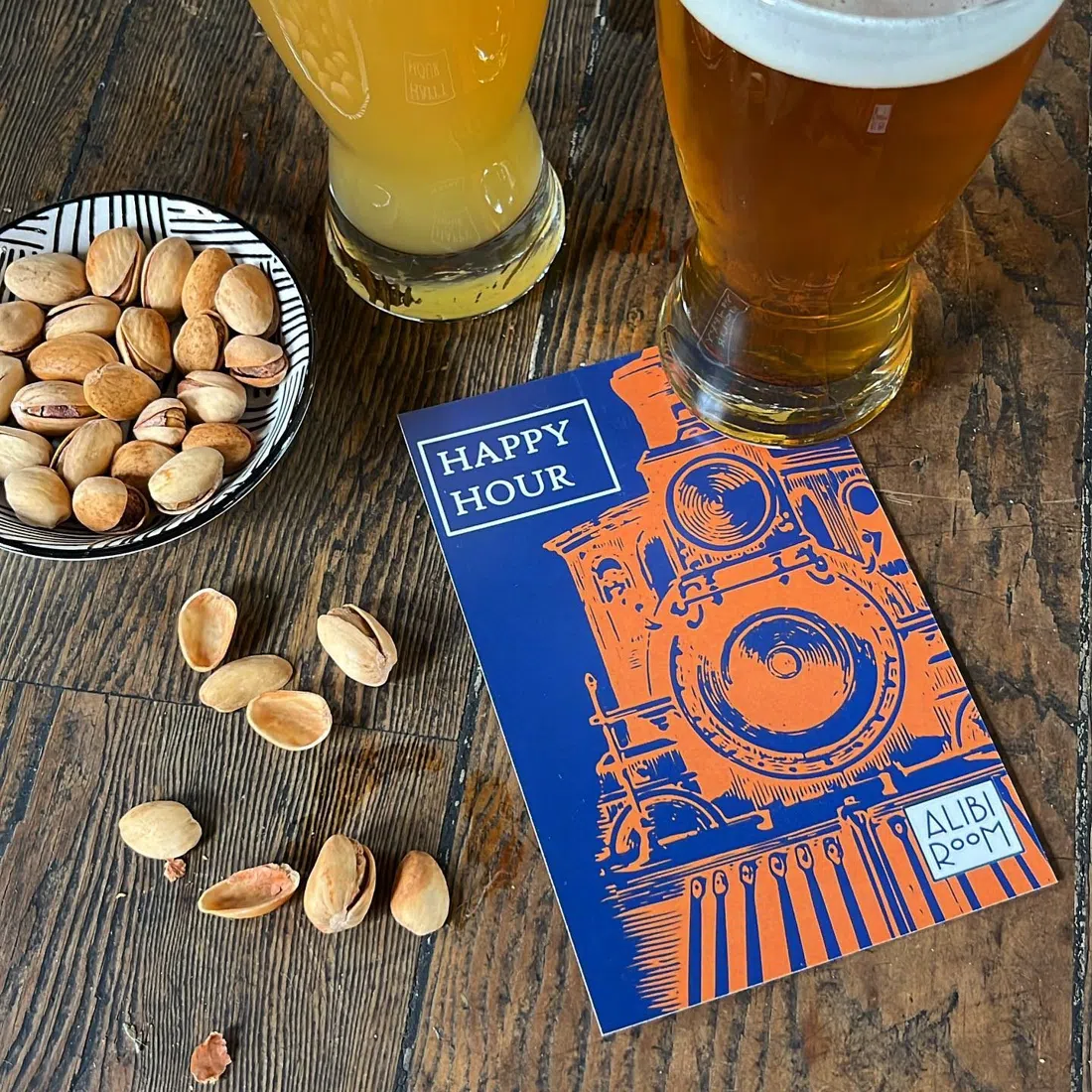
First rule: shake it outside. Not in the doorway, not on the mat, not two steps into the room. A Vancouver sidewalk drips for eight hours at a stretch and everybody has accepted that. A floor has not, and the person who arrives spraying the entrance is the one the room notices. Alibi Room (the eastern edge of Gastown, on Alexander Street) is where you learn this cleanly: the city's benchmark BC tap list, pints CAD $8–10, mains CAD $20–30, and a crowd that will judge you for shaking a wet umbrella indoors and not at all for owning one. Small groups can reserve. A party of eight on a Friday or Saturday night is a hard ask, so go early or come midweek.
Second rule: on a narrow sidewalk, tilt, do not raise. Lifting your umbrella above someone else's dumps your accumulated water onto their shoulders. Angling it outward over the kerb costs you nothing and is the single gesture that marks you as someone who has done a winter here.
Third rule: collapse before you board. Buses, the SkyTrain, the SeaBus and every small ferry on False Creek fill with standing water otherwise, and the stairwells get slippery. Do the same in cafés. An open umbrella left to dry across an aisle is the one piece of visitor behaviour that reliably annoys staff. Furl it and stand it in the corner.
Under a roof from the ferry to the fishmonger
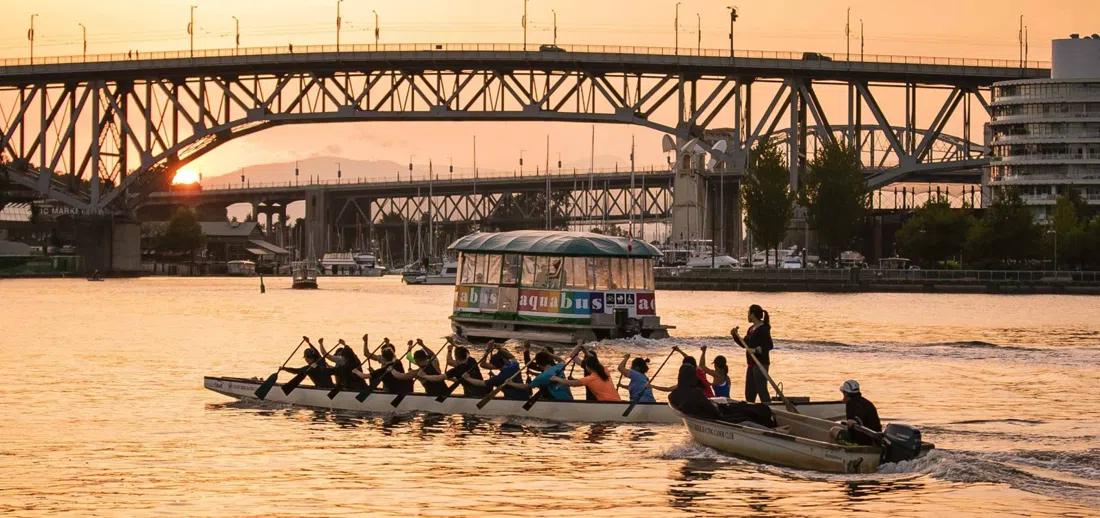
On a wet day the transport matters more than the destination. The Aquabus (False Creek, docks at Granville Island, Yaletown and Olympic Village) runs roughly every 15 minutes, costs about CAD $4–8 a hop, takes walk-ons with no booking, and is wheelchair and bike accessible. Private charters are available for groups. The boats are covered, the crossings are short, and this is the one piece of Vancouver sightseeing that improves in bad weather: grey water, low cloud on the bridges, and you dry off on the way.
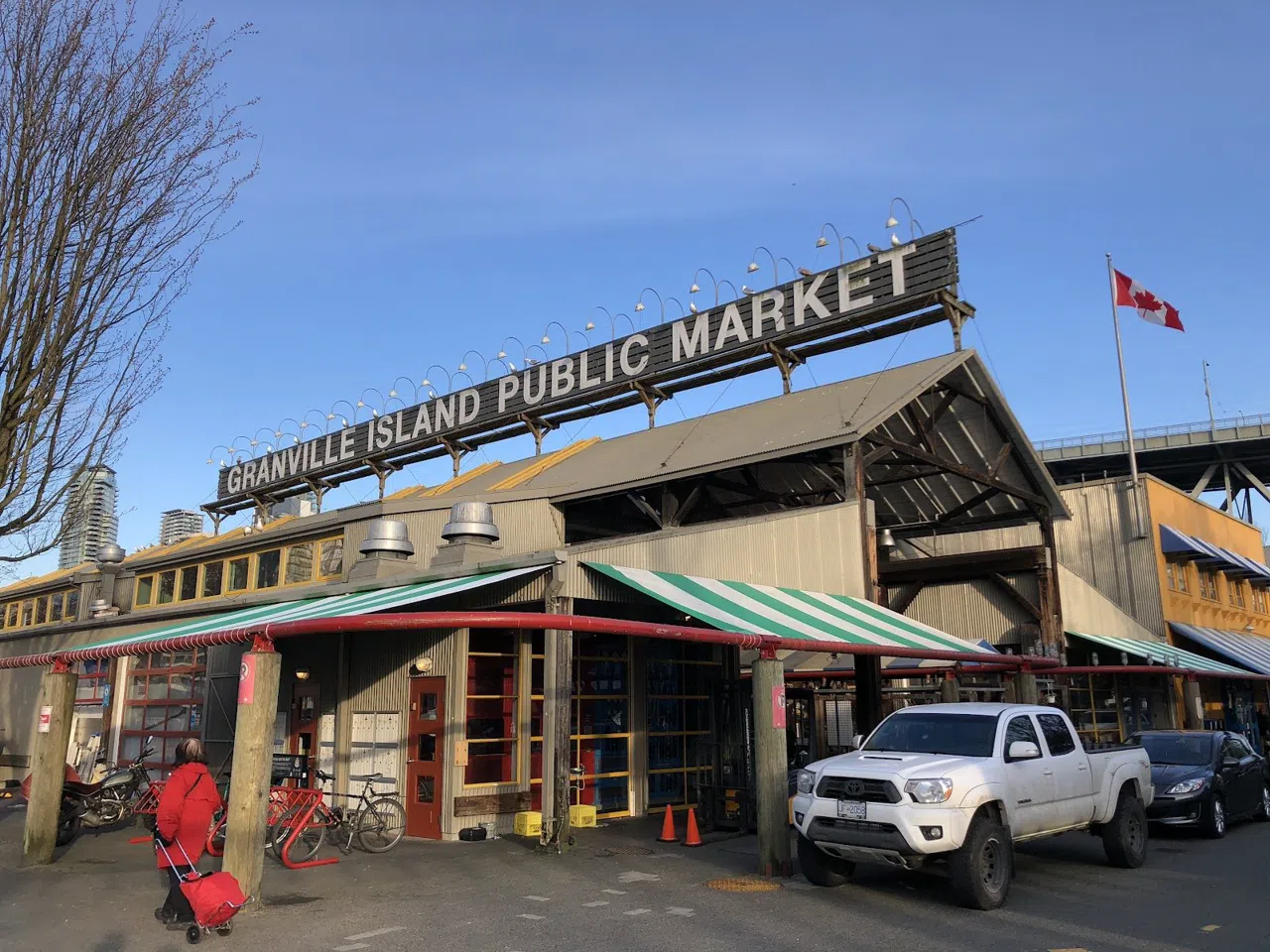
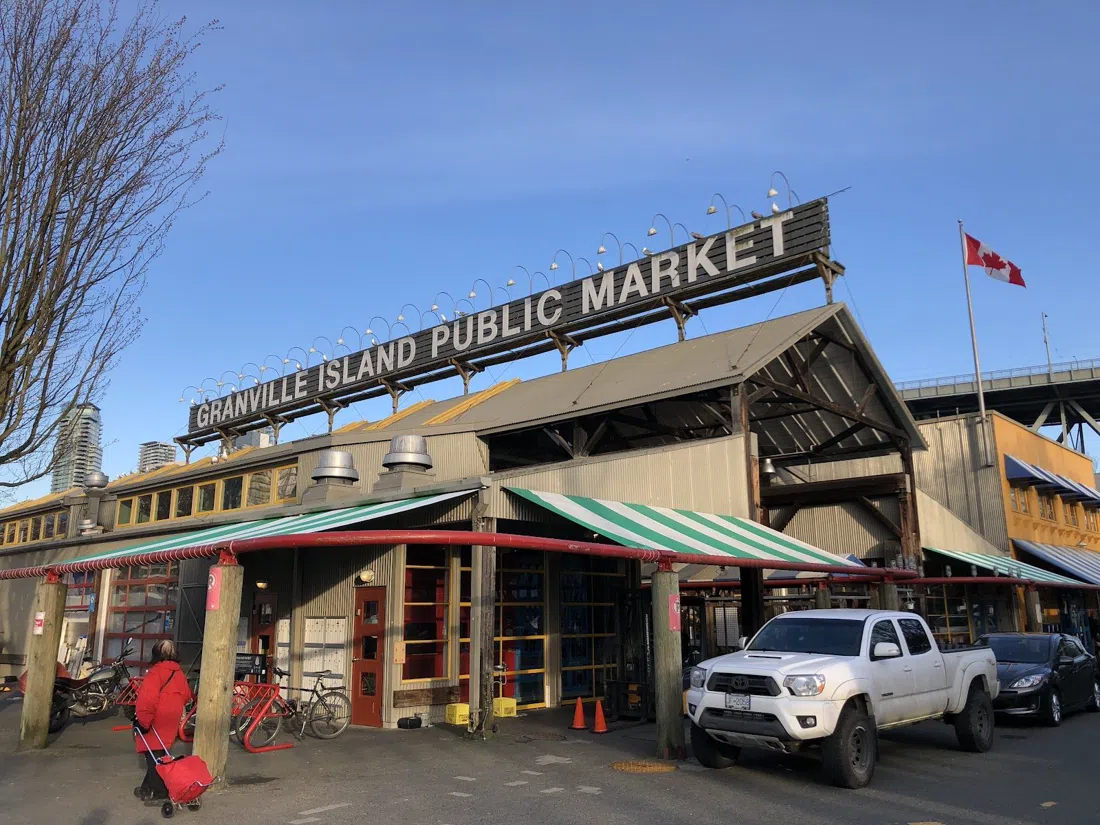
It delivers you to Granville Island Public Market (Granville Island, directly beneath the Granville Bridge), the default wet-day anchor. Fully roofed, free to enter, no booking for any size of party, open every day except December 25–26 and January 1. Snacks run CAD $5–20. The one thing worth timing: at weekend lunchtime the central aisles are a slow shuffle of shoulders and wet coats, and the Net Loft and the food-court seating absorb a group far better. Arrive before 11am, or arrive on a Wednesday and have the place to yourself.
Chain it properly and your umbrella stays in your bag for three hours: Aquabus across, market, coffee, Aquabus back to Yaletown, then indoors again.
Chinatown does this best
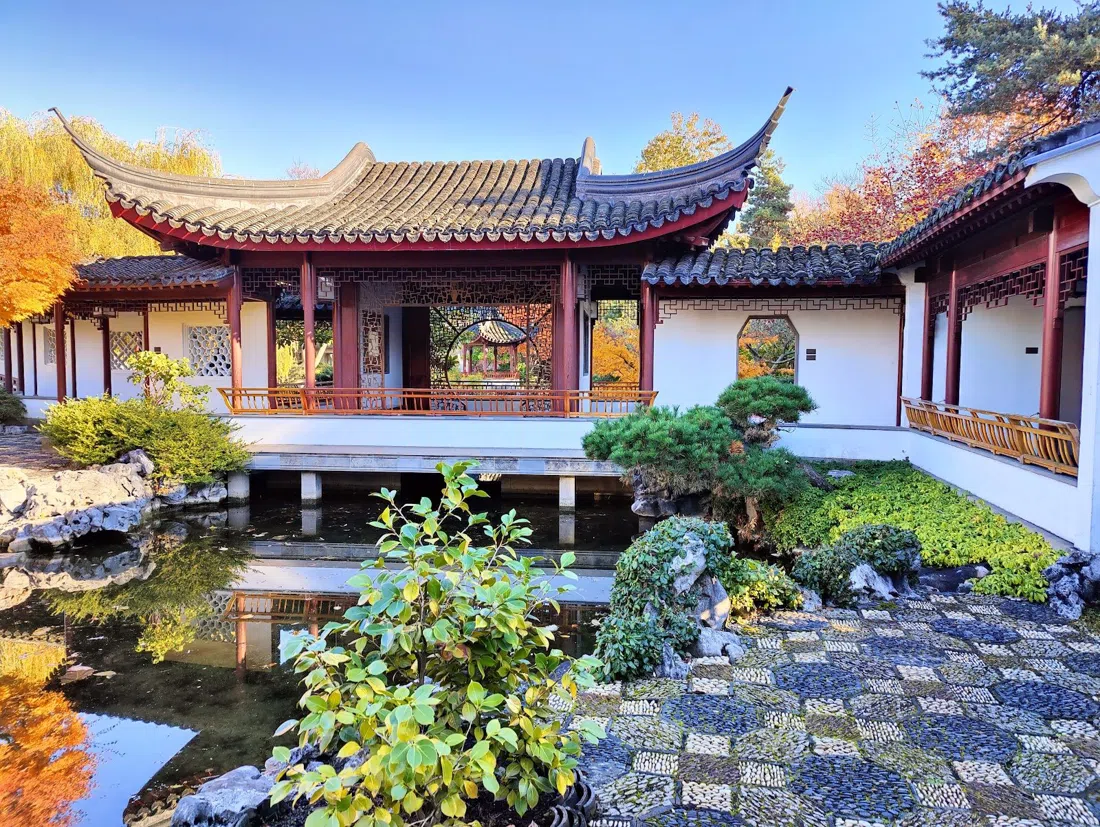
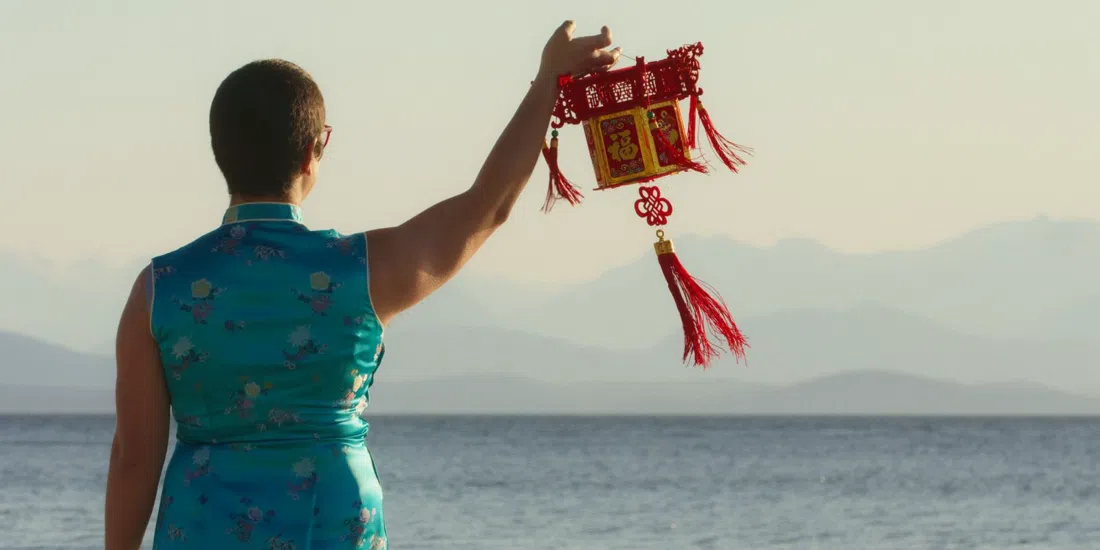
Nobody in this city built for rain as deliberately as Dr. Sun Yat-Sen Classical Chinese Garden (Chinatown, about a ten-minute walk from the Stadium–Chinatown station). The covered corridors let you walk the entire garden without stepping into open sky, which makes it the best piece of wet-weather design in Vancouver as well as the prettiest. Admission is CAD $16 adult, CAD $32 family. Guided and group tours book in advance, though those corridors are narrow and large parties get split into smaller ones to move through. It suits couples and pairs far better than a coach party. Closed Mondays.
Five minutes away on foot, the Chinatown Storytelling Centre (Chinatown, on Pender Street) runs timed tours at CAD $10–15 adult and takes group and school bookings. Its Learning Lab opened in May 2026 on the centre's fifth anniversary. It is small, it is dry, and it gives you the best short introduction to the neighbourhood you happen to be sheltering in: thirty to forty-five minutes, about the length of a squall.
The museums, and the Monday problem
Several of the best rainy-day rooms in Vancouver are shut at the start of the week. Learn this before you plan, not at the door.
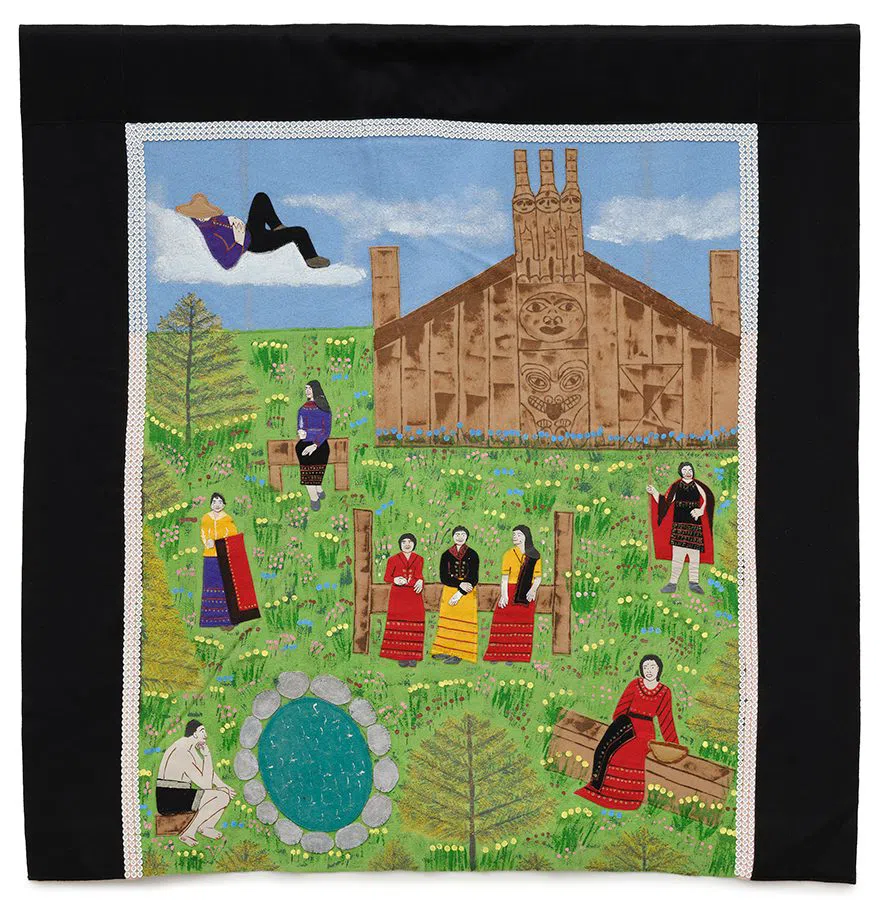
Museum of Anthropology at UBC (Point Grey, on the university campus) reopened in June 2024 after a $40m rebuild and is worth the trip out. CAD $18–20 adult, with gallery volumes big enough to swallow a coach party without anyone feeling herded, and booked group and school tours are standard here. The catch is seasonal and precisely inconvenient: from October 15 to May 15 it closes on Mondays, which is the exact half-year you need it. Take the 99 B-Line bus to the UBC exchange and walk about ten minutes, so budget forty-five minutes each way from downtown and keep your hood up for the campus walk.
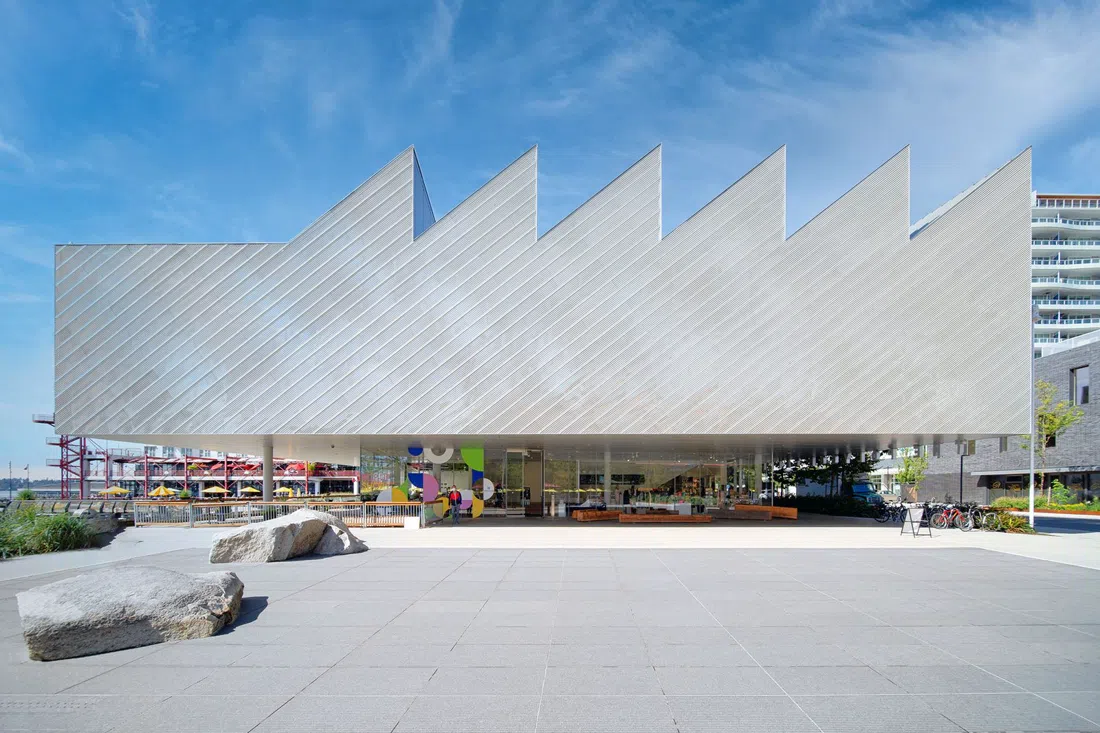
The Polygon Gallery (across the harbour at the quay, right at the SeaBus terminal) is admission by donation, walk-in, with group tours arrangeable in advance. It is closed Mondays and Tuesdays. The reason to go anyway is the journey: the SeaBus crossing is 12 covered minutes over open water, which counts as sightseeing in a squall, and the gallery sits at the far dock, so the walk in the rain is measured in seconds.
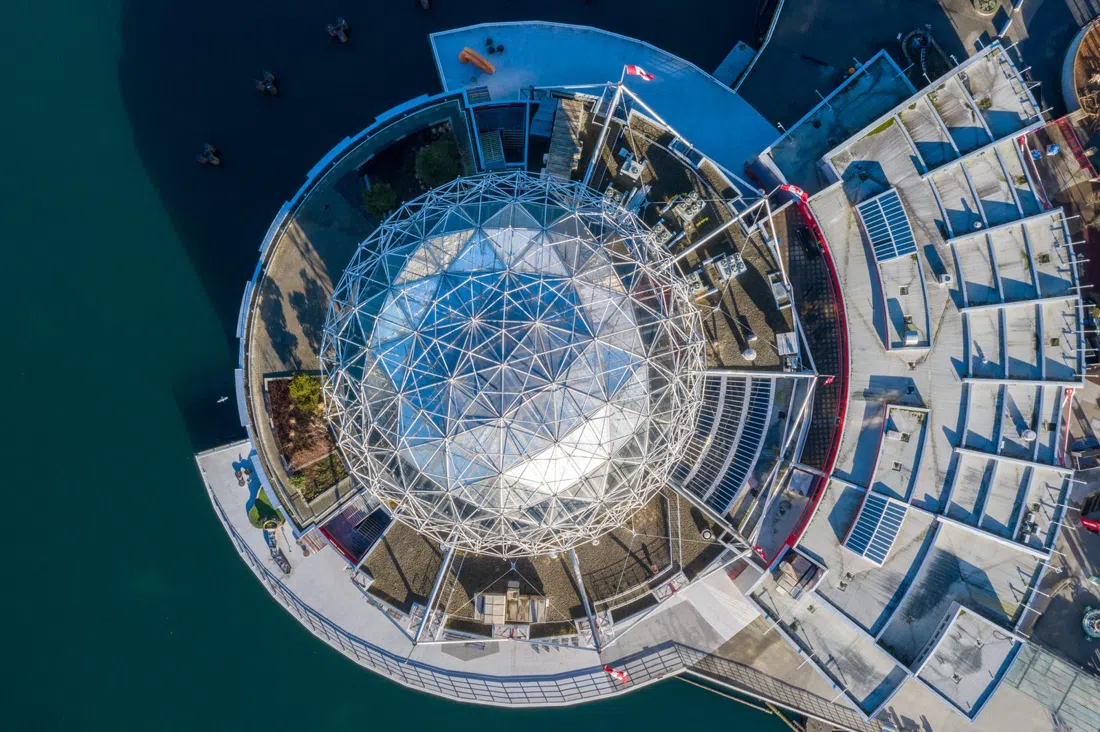
Science World (False Creek, at the Main Street–Science World station) is open when the others are not and is built for large parties, with group rates and school bookings. It is CAD $35 adult, hands-on and entirely indoors, and best suited to families rather than couples looking for a quiet afternoon. For 2026, the dome is temporarily clad in FIFA World Cup match-ball panels, so the classic mirrored-sphere photograph is on pause this year.
Two warm rooms and a decent coffee
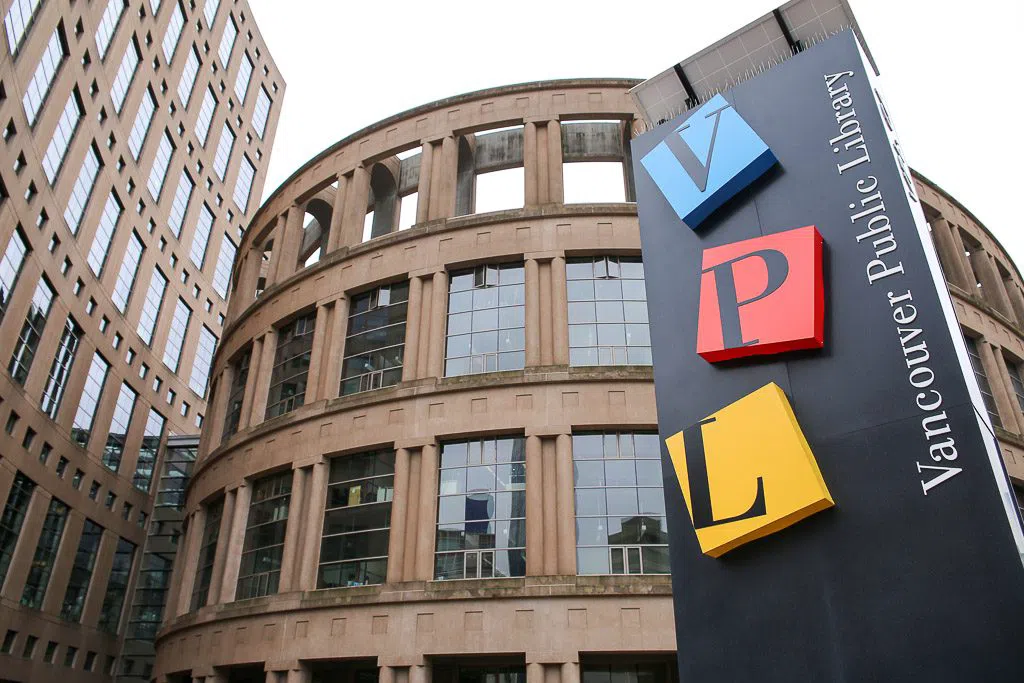
When the rain settles in for a solid two hours and you do not want to pay for shelter, go to Vancouver Public Library, Central Library (downtown, on West Georgia). It is free, open to all, needs no booking, and the glass-roofed atrium is the best dry room in the city. Sit with a coffee and let the weather run its course. Groups are fine in the atrium; the reading rooms expect quiet, so split up if you are more than four. The Level 9 roof garden is open to anyone with no reservation, which almost nobody realises.
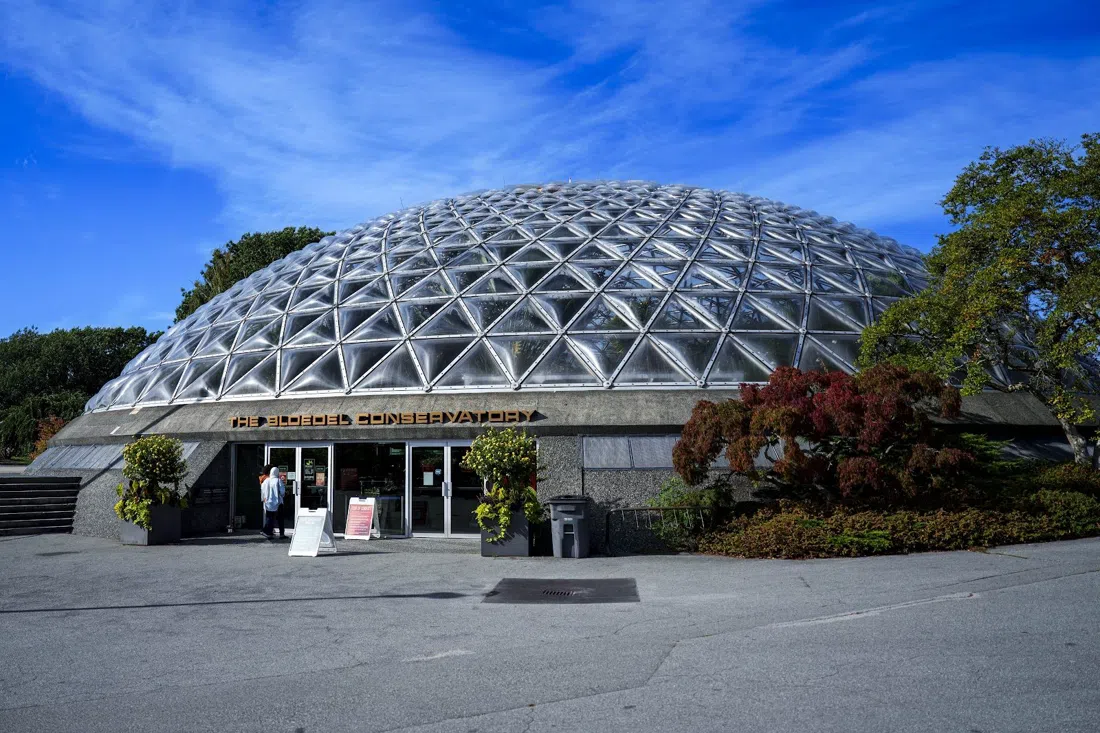
For something warmer, Bloedel Conservatory (Queen Elizabeth Park, a fifteen-minute uphill walk from the King Edward station) is a tropical dome at CAD $8–12 adult where you stand in humid heat and watch the drizzle work on the glass. Walk-in for small groups; school and tour parties book ahead through the Park Board. The trap is the winter timetable: from November to February it closes at 4pm, and 4pm in a Vancouver January is already dusk. Go at 2pm or not at all.
Coffee has a destination here rather than a fallback. Nemesis Coffee (Gastown) placed 15th on the 2026 World's 100 Best Coffee Shops list and was the highest-ranked Canadian entry, which makes it worth a deliberate walk rather than an accidental one. Walk-in only, no reservations, CAD $5–9 for coffee and a pastry. The room holds a group of about six comfortably, but seats evaporate at weekend brunch, so turn up at 9am or after 2pm.
Getting wetter on purpose
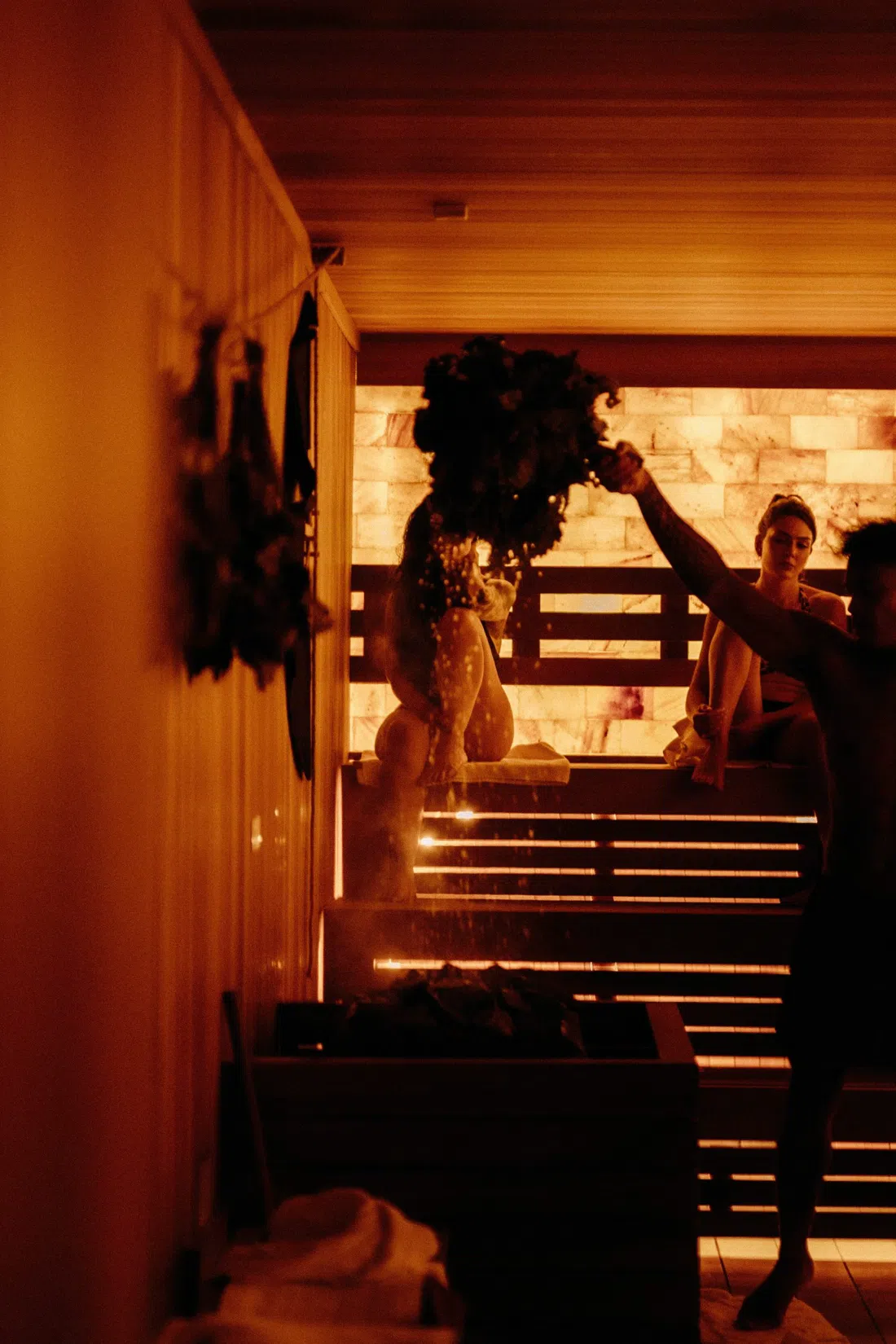
The local argument about the wet season is that you beat it by getting wet on purpose. AetherHaus (sessions booked online, city centre) opened in June 2025 and runs Aufguss-style guided sauna rounds with contrast bathing, at CAD $45–70 a session. It is communal by design, which is either the appeal or the dealbreaker depending on your temperament, and it takes private bookings if your group wants the room to itself. Book ahead. The evening rounds fill first, and walking up hopeful in January is optimistic.
When the rain settles in for the evening
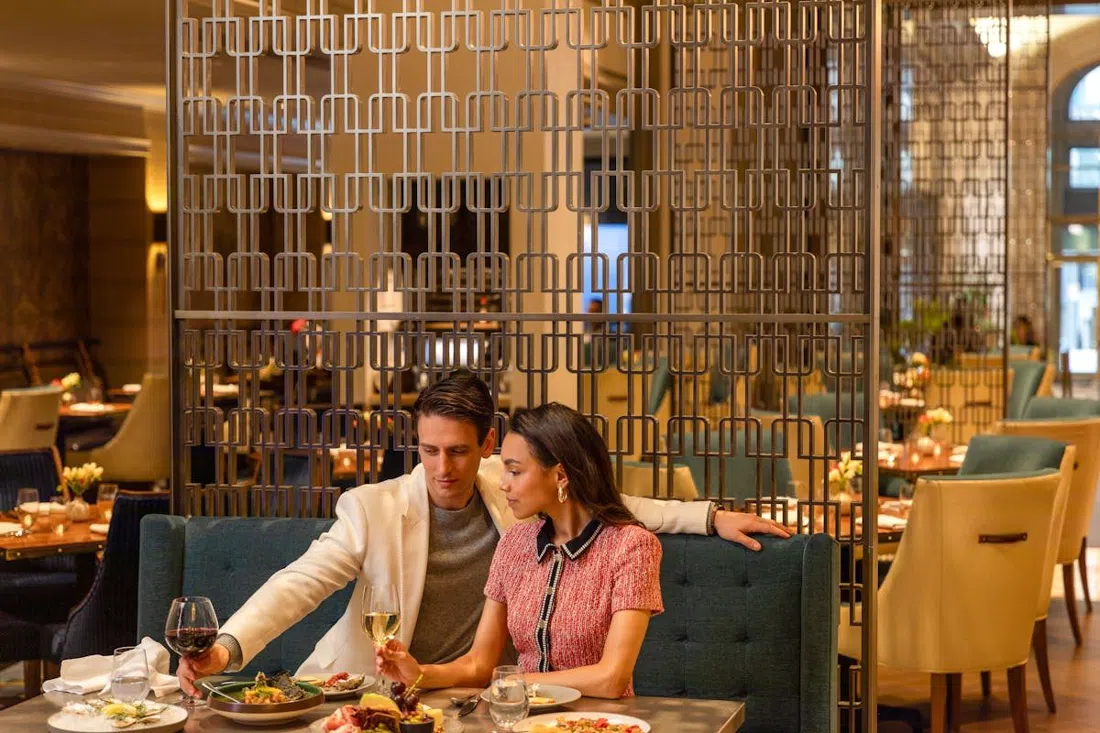
The grand version of a wet afternoon is tea at Notch8 at Fairmont Hotel Vancouver (downtown, on West Georgia, five minutes on foot from the library). CAD $75–95 per person, reservations essential, group bookings and private events taken. Two constraints matter: tea is served Thursday through Sunday only, at set seatings, and it runs on themed seasons. Book before you walk over, not when you arrive damp in the lobby.
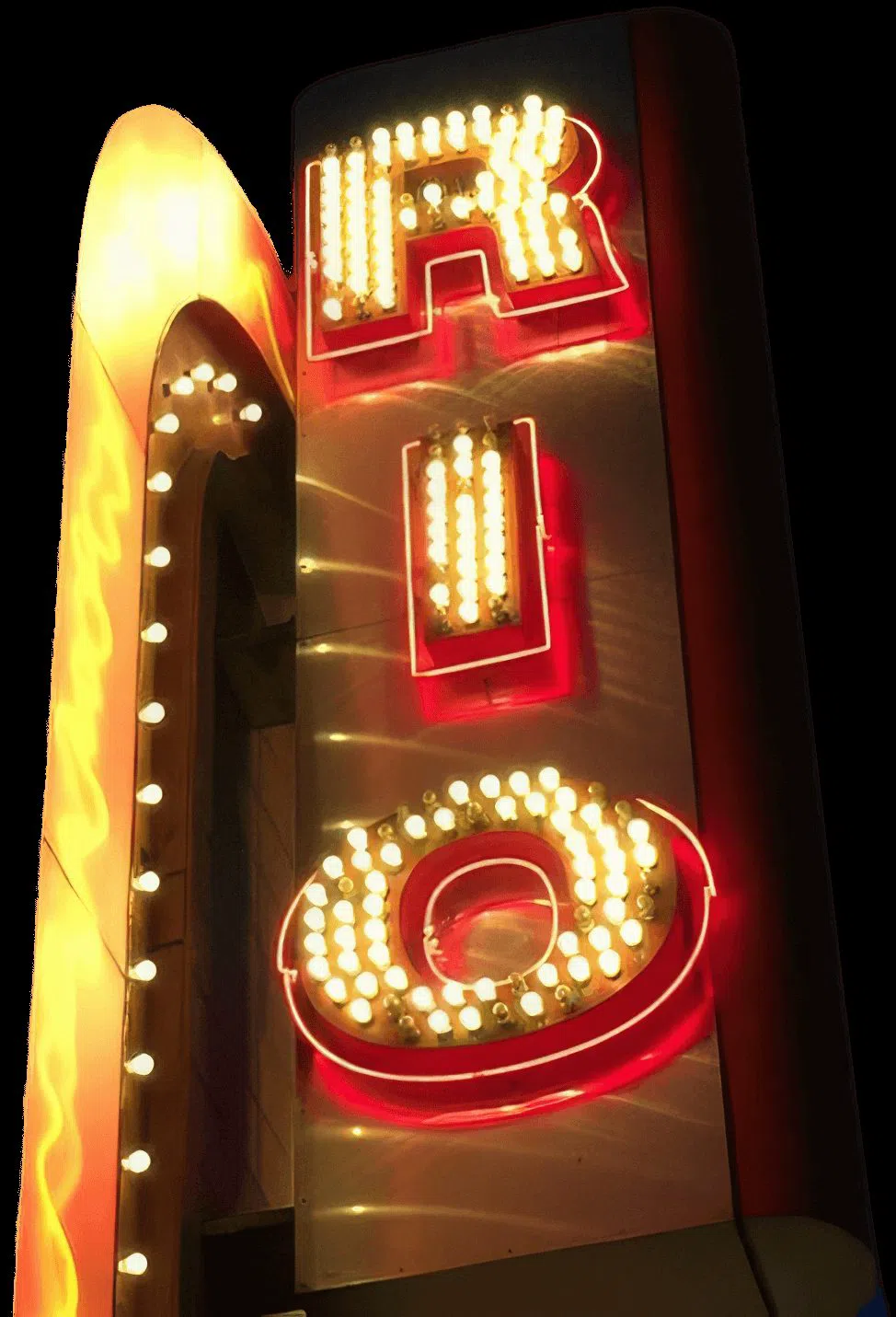
For an evening that requires nothing of you, Rio Theatre (East Vancouver, at Broadway and Commercial) is community-owned, programmes cult repertory, and charges CAD $14–20 a ticket, walk-up or online. It sits steps from a SkyTrain station, so you arrive and leave under cover, which is the whole point in February. Whole-venue rentals and group buyouts are available if you are travelling with a crowd.
And when the crowd is soaked and hungry, Steamworks Brewing Company (Gastown, near Waterfront Station) is the one brewpub in the district big enough to absorb ten wet people without a fuss: large-party bookings, private rooms and event space across multiple floors, pints CAD $8–10, mains CAD $22–35. The beer is brewed by the same steam system that drives the tourist clock outside, which is the rare piece of Vancouver trivia that happens to be true.

Practical notes
Season. The wet months run roughly late October to mid-April. Expect drizzle rather than downpours, temperatures around 4–9°C, and daylight that gives out by 4.30pm in December. Nothing closes for weather; plenty closes on Mondays.
Transport. A stored-value transit card or contactless tap card covers bus, SkyTrain and SeaBus, and the SeaBus is included: a 12-minute covered crossing priced as transit, not a tour boat. The Aquabus on False Creek is separate, CAD $4–8 a hop, paid on board.
Cash. Effectively optional. Cards and phones work everywhere listed here, including the market stalls and the ferries. Tipping runs 15–20% in bars and restaurants.
Timing. Build days around the Monday and Tuesday closures: the anthropology museum and the classical garden on Monday, the photography gallery on Monday and Tuesday. Get the conservatory done before its 4pm winter close. Book afternoon tea, sauna sessions and any table for more than six in advance; everything else on this list takes walk-ins.
Budget. A full wet day costs very little if you want it to. Free market entry, free library, donation-based gallery, a couple of ferry hops and a good coffee will land under CAD $30. Add a museum, a sauna round and dinner with pints and you are at CAD $150–200 a head. For a base, downtown or Gastown keeps you within covered walking distance of most of the above; compare rates through Vancouver hotel search.
One last thing. Pack the shell, pack the hood, and if you bring an umbrella, bring a small one. You will use it perhaps a third of the time you expect to, and the rest of the week it lives in your bag while you take the boat instead.